

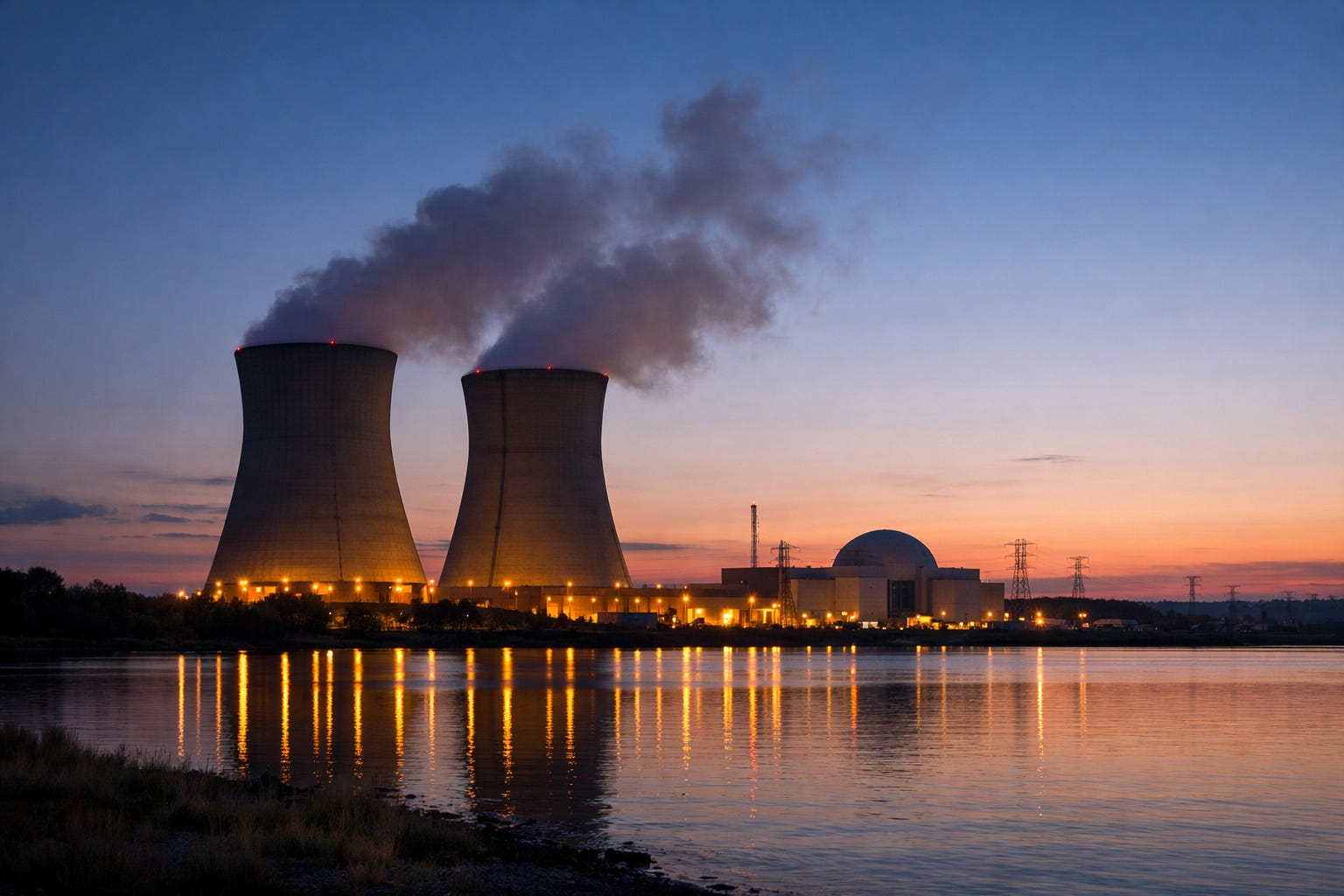
Every energy transition has favorites.
Renewables get the headlines.
Fossil fuels get the arguments.
Nuclear gets… tolerated.
It sits in an odd place — essential, underappreciated, and always just outside the spotlight. The awkward middle child of the energy transition.
It Works Too Well for Modern Politics
Nuclear doesn’t spike, crash, or surprise.
It just runs.
That’s a problem in a world that rewards drama. Reliability doesn’t trend. Stability doesn’t mobilize. When something works quietly, it’s easy to forget why it exists in the first place.
Markets Want Speed. Narratives Want Simplicity.
Nuclear offers neither.
Long timelines.
Heavy capital.
Returns measured in decades.
At the same time, it refuses to fit neatly into modern energy stories. It’s clean, but not “renewable” in the popular sense. Centralized in an era obsessed with decentralization.
So it gets pushed aside — not because it fails, but because it complicates the message.
The Real Barrier Isn’t Technology
It’s trust.
Nuclear is held to a different standard. It is expected to be flawless indefinitely, while other systems are allowed failure as part of progress.
When tolerance for error is zero, hesitation becomes policy.
The Irony No One Likes to Acknowledge
Modern nuclear designs now reuse existing waste as fuel, reducing long-term liabilities instead of expanding them.
In other words, nuclear quietly solved one of the very objections used against it.
That’s where the debate becomes uncomfortable — because once the technical arguments weaken, what remains are emotional ones.
Always in the Plan. Rarely in Practice.
Nuclear shows up in long-term models and white papers. It’s endorsed abstractly and delayed specifically.
Everyone agrees it’s necessary — just not here, just not now.
So it waits.
When Reality Interrupts the Narrative
Energy systems don’t care about storytelling.
When conditions are unfavorable and stakes are high, reliability matters more than aesthetics. At those moments, the unglamorous options suddenly become indispensable.
Nuclear doesn’t arrive as a hero.
It arrives as a necessity.
Final Thought
Nuclear power isn’t the favorite of the energy transition.
It’s the awkward middle child — rarely celebrated, often sidelined, and quietly holding the system together when things get difficult.
That role isn’t glamorous.
But it’s indispensable.
You can read the whole view here